
Your crypto assets are scattered everywhere: some Bitcoin on Coinbase, Ethereum in a MetaMask wallet, DeFi positions across Uniswap and Compound, maybe a few NFTs on OpenSea, and that forgotten altcoin on a smaller exchange. Checking each platform individually to understand your total portfolio value becomes a daily chore that eats up time and mental energy. The fragmented view makes it nearly impossible to track real performance or prepare for tax season.
The goal isn’t just to see all your holdings in one place—it’s to create a unified crypto dashboard that actually simplifies your financial life. A properly configured crypto portfolio tracker eliminates the need to juggle multiple apps, spreadsheets, and browser tabs. Beyond convenience, these dashboards provide essential P&L tracking for investment decisions and automated transaction categorization that makes tax reporting manageable. This guide walks you through choosing the right dashboard approach, comparing top tools across different use cases, setting up secure connections, and optimizing your view for clarity over complexity.
What Makes Tracking Multiple Crypto Assets in One Dashboard “Simple”?
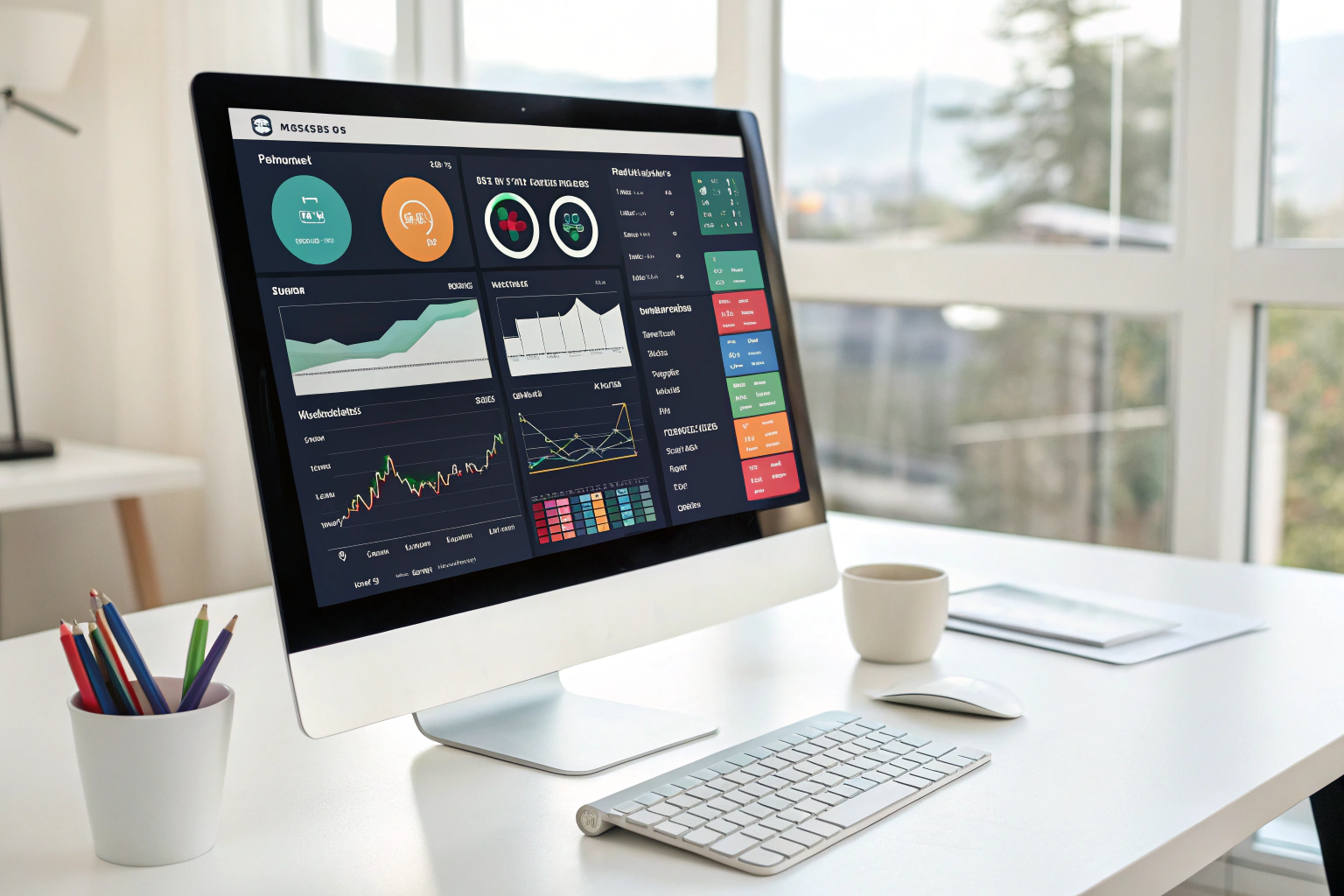
Simplicity in crypto dashboard design boils down to three core principles: minimal manual input, reliable real-time data, and intuitive visual hierarchy. The best dashboards automatically sync your holdings across exchanges and wallets with minimal setup, display accurate pricing from trusted data sources, and present your portfolio performance in clean charts that highlight what matters most. When you can check your complete crypto position in under 30 seconds and trust the numbers you see, you’ve found a truly simple solution.
A comprehensive crypto dashboard should seamlessly integrate three essential components: current balances across all your holdings, profit and loss calculations that account for fees and transfers, and tax-ready transaction categorization. The most effective tools automatically calculate your cost basis, track unrealized gains, and flag taxable events without requiring constant manual updates. This integrated approach transforms scattered financial data into actionable insights.
Traditional DIY spreadsheets require hours of manual data entry, frequent updates, and complex formulas that break when you add new assets or exchanges. Professional crypto dashboards eliminate this maintenance burden through automated API connections and real-time synchronization. While spreadsheets might work for simple buy-and-hold strategies, they quickly become unmanageable once you start trading across multiple platforms, participating in DeFi protocols, or dealing with more than a handful of different cryptocurrencies.
The key to dashboard simplicity lies in matching the tool’s capabilities to your actual needs rather than choosing the most feature-rich option available. A casual investor holding Bitcoin and Ethereum across two exchanges needs a fundamentally different solution than a DeFi power user managing liquidity positions across multiple chains. The simplest dashboard for you is the one that handles your specific use case efficiently without overwhelming you with irrelevant features or complex navigation.
Key Features a “Simple” Crypto Dashboard Must Have
- Multi-exchange API integration that securely connects to major centralized exchanges like Coinbase, Binance, and Kraken using read-only permissions
- Multi-chain wallet tracking supporting Bitcoin, Ethereum, and other major blockchain networks through wallet address monitoring
- Real-time price feeds from reliable data providers that update portfolio values automatically throughout the day
- Automated P&L calculations that account for fees, transfers between wallets, and different cost basis methods
- Transaction history consolidation that aggregates trades, deposits, withdrawals, and transfers from all connected sources
- Basic tax reporting features including capital gains calculations and transaction categorization for common tax scenarios
- Mobile responsiveness allowing you to check your portfolio and make quick decisions from any device
Why Simplicity Matters More Than Raw Feature Count
Cognitive overload kills the primary benefit of using a unified crypto dashboard in the first place. When a tool presents dozens of charts, metrics, and configuration options on every screen, users spend more time navigating the interface than actually monitoring their investments. The most successful crypto investors rely on dashboards that surface critical information immediately—current portfolio value, daily change, and major position movements—without requiring clicks through multiple tabs or complex menu systems.
Advanced analytics features like technical indicators, social sentiment scores, and deep blockchain analytics serve specific use cases but can overwhelm users who simply want to track their holdings’ performance. A day trader might benefit from minute-by-minute price alerts and detailed order book data, but a long-term investor needs clear trends and portfolio allocation insights. Choosing tools that match your trading frequency and complexity level prevents feature bloat from obscuring the metrics you actually need to make decisions.
The trade-off between comprehensive data and usable insights becomes especially important when managing crypto portfolios across multiple time zones and market cycles. Simple dashboards that prioritize essential metrics—portfolio balance, percentage changes, and major news alerts—enable quick decision-making during volatile periods. Complex analytical tools that require extensive customization or learning curves can actually slow down your response time when markets move quickly.
Quick Selector: Which Type of Crypto Dashboard Do You Really Need?
Different crypto users have fundamentally different tracking needs, and the “best” dashboard varies dramatically based on your holdings mix, trading frequency, and technical expertise. A Bitcoin-only long-term holder requires completely different features than someone actively farming yield across multiple DeFi protocols. Understanding your user profile before comparing specific tools saves time and prevents you from either overpaying for unused features or choosing a solution that can’t handle your actual requirements.
The decision framework below maps common crypto user types to their typical platform needs, helping you identify which category of dashboard tools to focus on. Rather than getting lost in feature comparison charts, start by identifying your primary use case and let that guide your tool selection process.
| User Profile | Typical Holdings | Integration Needs | Best Dashboard Style | Examples |
|---|---|---|---|---|
| Casual HODLer | BTC, ETH, few altcoins on 1-2 exchanges | Basic exchange APIs, hardware wallet | Simple mobile-first tracker | CoinStats, Blockfolio |
| Active Trader | Diverse portfolio across 3+ exchanges | Multiple exchange APIs, detailed P&L | Tax-focused comprehensive tracker | CoinLedger, Koinly |
| DeFi Participant | LP tokens, yield farming, staking rewards | Multi-chain wallet tracking, DeFi protocols | On-chain analytics dashboard | DeBank, Zapper |
| NFT Collector | NFT collections, some crypto for trading | NFT marketplace tracking, Ethereum wallet | NFT-integrated portfolio tracker | Nansen, CoinStats Pro |
| Diversified Investor | Crypto as part of broader investment portfolio | Crypto + traditional assets integration | All-asset wealth tracker | Kubera, Personal Capital |
How to Use This Selector Before You Dive Deeper
Start by honestly assessing which profile matches your current crypto activity level and holdings complexity, not where you think you might be in the future. Your immediate need is a dashboard that works well for your current situation, and most quality tools allow you to upgrade or add features as your requirements evolve. Choosing based on aspirational use cases often leads to paying for complexity you don’t need while missing features that would actually improve your daily portfolio management experience.
Focus on optimizing for your primary use case rather than trying to find a tool that handles every possible edge case perfectly. If 80% of your portfolio value sits in spot holdings on major exchanges, choose a tool that excels at exchange integration even if its DeFi tracking capabilities are limited. You can always add specialized tools for smaller portions of your portfolio later, but your core dashboard should handle your main holdings seamlessly.
All-in-One Portfolio Trackers with Built-in Tax & Analytics
Tax-focused crypto trackers like CoinLedger and Koinly have evolved into comprehensive portfolio management platforms that combine real-time tracking with detailed tax reporting capabilities. These tools excel at handling complex trading histories, multiple exchanges, and the intricate cost basis calculations required for accurate tax filing. For users with significant trading activity or complicated P&L situations, starting with a tax-first platform often provides the most complete long-term solution.
The advantage of tax-integrated platforms becomes especially apparent during tax season, when portfolio trackers without built-in tax features require exporting data to separate tax software or manually calculating gains and losses. Tax-first trackers maintain detailed transaction histories with proper cost basis tracking from day one, eliminating the scramble to reconstruct trading history months later. This approach works particularly well for active traders who need both daily portfolio monitoring and year-end tax preparation in a single workflow.
However, tax-focused platforms typically prioritize comprehensive data collection over streamlined user interfaces, which can make daily portfolio checking feel more complex than necessary. The detailed categorization and reporting features that make these tools powerful for tax purposes can create visual clutter for users who simply want to check their current portfolio value and performance trends.
| Tool | Best For | Integrations | Tax & Reporting | DeFi/NFT Support | Pricing Simplicity |
|---|---|---|---|---|---|
| CoinLedger | High-volume traders, complex portfolios | 300+ exchanges, major wallets, CSV import | Complete tax forms, multiple countries | Advanced DeFi, basic NFT tracking | Transaction-based tiers, clear limits |
| Koinly | International users, diverse assets | 350+ exchanges, extensive wallet support | Global tax optimization, audit trails | Good DeFi integration, NFT valuation | Annual subscription, unlimited syncing |
| CoinTracker | US users, simplified tax filing | Major exchanges, popular wallets | TurboTax integration, US-focused | Basic DeFi, limited NFT features | Free tier available, gradual scaling |
| Accointing | Portfolio analytics + tax prep | 200+ exchanges, multi-chain wallets | Comprehensive reporting, multiple formats | DeFi tracking, NFT portfolio view | Freemium model, feature-based tiers |
When a Tax-First Tracker Is the Simplest All-in-One Dashboard
High-volume traders who execute dozens or hundreds of transactions per month benefit most from tax-first trackers because these platforms automatically categorize and calculate the cost basis for every trade in real-time. Attempting to recreate this level of detailed record-keeping using separate portfolio trackers and tax software requires manual data export, import, and reconciliation processes that become overwhelming during active trading periods. The upfront complexity of configuring comprehensive tax tracking pays dividends when you need detailed P&L analysis or face tax audits.
Users with complex crypto income streams—including staking rewards, DeFi yield farming, mining income, and NFT sales—find that tax-focused platforms handle the intricate categorization and valuation requirements more accurately than general portfolio trackers. These tools automatically distinguish between different types of taxable events, apply appropriate cost basis methods, and generate the detailed records required for accurate tax reporting. For this user group, the tax features aren’t an add-on but the core functionality that makes comprehensive portfolio tracking possible.
The integrated approach becomes especially valuable for crypto investors who operate across multiple jurisdictions or face specific regulatory requirements. Tax-first platforms typically stay updated with changing regulations and provide jurisdiction-specific reporting formats, eliminating the need to research and implement tax rule changes manually. This regulatory compliance automation can save dozens of hours during tax preparation while reducing the risk of costly filing errors.
Pros and Cons of Using Tax Suites as Your Primary Portfolio View
- Comprehensive transaction history with detailed cost basis tracking that supports multiple accounting methods and audit-ready documentation
- Advanced P&L analytics including realized vs unrealized gains, tax loss harvesting opportunities, and performance attribution across different asset classes
- Extensive exchange support with API connections to hundreds of platforms including smaller regional exchanges that specialized trackers might miss
- Automated compliance features that adapt to changing tax regulations and generate required forms for multiple jurisdictions
- Interface complexity that prioritizes comprehensive data over user-friendly daily portfolio monitoring, potentially overwhelming casual users
- Higher subscription costs reflecting the advanced features and ongoing regulatory compliance updates, which may not justify the expense for simple portfolios
- Learning curve requirements as users must understand tax categorization and reporting concepts to optimize the platform’s capabilities effectively
Portfolio Trackers Focused on Simplicity and One-Dashboard Experience
Simplicity-focused crypto trackers prioritize clean user interfaces and streamlined workflows over comprehensive feature sets, making them ideal for users who want quick portfolio checks without navigating complex menus or configuration screens. These platforms typically excel at the core functions most crypto investors actually use daily: checking current balances, viewing performance trends, and monitoring major price movements across their holdings.
The mobile-first design philosophy of tools like CoinStats and Blockfolio reflects the reality that most portfolio checking happens on phones during brief moments throughout the day. These apps prioritize fast loading times, clear visual hierarchy, and one-tap access to essential information. The simplified approach works particularly well for users whose crypto holdings consist primarily of spot positions on major exchanges, where the complexity of advanced DeFi or tax features would add little value.
However, the focus on simplicity often means accepting limitations in areas like detailed analytics, comprehensive exchange support, or advanced portfolio management features. Users with growing portfolios may eventually outgrow these tools as their needs become more sophisticated, requiring migration to more comprehensive platforms.
| Tool | Core Angle | Supported Platforms | Ease of Setup | Mobile Experience | Ideal User |
|---|---|---|---|---|---|
| CoinStats | Clean UI, quick portfolio overview | 100+ exchanges, major wallets, DeFi basics | 5-minute exchange connection | Excellent, fast loading | Casual to intermediate holders |
| Blockfolio | Social features, news integration | Major exchanges, manual entry focus | Manual trade entry required | Mobile-only, social feed | Social crypto community members |
| Delta | Privacy-focused, local storage | Limited auto-sync, manual tracking | Manual portfolio building | Solid, privacy-centered design | Privacy-conscious investors |
| Coingecko Portfolio | Market research + tracking | Basic exchange APIs, manual entry | Simple but limited automation | Web-focused, decent mobile | Research-focused traders |
| Personal Capital | Crypto as part of broader wealth | Major exchanges, traditional accounts | Financial account aggregation | Full-featured mobile app | Diversified wealth managers |
Why CoinStats-Style Dashboards Feel Simplest for Everyday Users
CoinStats-style dashboards prioritize the information hierarchy that matches how most people actually check their crypto portfolios: total value first, major holdings breakdown second, and detailed analytics only when specifically needed. The main screen immediately shows portfolio value, 24-hour change, and top holdings without requiring navigation through tabs or menus. This approach eliminates the cognitive load of deciding what to check first, making portfolio monitoring feel effortless rather than analytical.
The streamlined setup process for exchange connections typically takes under ten minutes and requires minimal technical knowledge, focusing on the most common use case of tracking holdings across 2-3 major exchanges plus a hardware wallet. Advanced features like DeFi tracking or detailed tax reporting are available but don’t clutter the primary interface, allowing users to add complexity gradually as their needs evolve. This progressive disclosure approach prevents feature overwhelm while maintaining upgrade paths.
Mobile optimization in simplicity-focused trackers goes beyond responsive design to fundamentally rethink information presentation for small screens and brief interaction sessions. Key metrics are sized for quick scanning, and the most common actions—checking balance, viewing performance, setting price alerts—are accessible within one or two taps. This mobile-first approach works particularly well for users who primarily hold spot positions and check their portfolios during short breaks throughout the day rather than conducting extended analysis sessions.
DeFi-First and On-Chain Dashboards for Power Users
DeFi-focused dashboards like Nansen and DeBank address the unique complexity of tracking positions across decentralized protocols, where traditional portfolio trackers struggle with liquidity pools, yield farming rewards, and complex token mechanics. These platforms specialize in parsing on-chain data to provide accurate valuations of LP tokens, staking positions, and governance token holdings that would be nearly impossible to track manually across multiple protocols.
The sophisticated analytics capabilities of DeFi dashboards extend beyond simple balance tracking to include yield optimization, protocol risk assessment, and advanced position management tools. Power users who actively manage positions across multiple DeFi protocols benefit from features like impermanent loss tracking, yield comparison tools, and automated rebalancing alerts. However, this analytical depth comes with increased interface complexity that can overwhelm users with simpler portfolios.
On-chain analytics platforms provide the most comprehensive view of blockchain-native assets but require users to understand concepts like transaction indexing, smart contract interactions, and multi-chain bridge tracking. The learning curve for effectively using these tools is significantly higher than traditional portfolio trackers, making them most suitable for users who are already comfortable with DeFi concepts and actively participate in multiple protocols.
| Tool | Best For | Chains Covered | DeFi/NFT Depth | Analytics Level | Complexity for New Users |
|---|---|---|---|---|---|
| DeBank | DeFi portfolio overview, protocol tracking | 15+ major chains, L2 networks | Comprehensive DeFi, basic NFT view | Intermediate, protocol-focused | Moderate, DeFi knowledge helpful |
| Zapper | Active DeFi management, position optimization | Ethereum-focused, select L2s | Deep DeFi integration, NFT galleries | Advanced, actionable insights | High, requires DeFi experience |
| Nansen | Professional analysis, whale tracking | Ethereum, Bitcoin, select alts | Professional-grade NFT analytics | Expert-level market intelligence | Very high, professional tool |
| Yearn Watch | Yield farming optimization | Ethereum, Yearn ecosystem focus | Specialized yield tracking | Specialized, yield-focused | Moderate, yield farming knowledge needed |
| APY.vision | LP position analysis, IL tracking | Multi-chain DEX support | Deep liquidity provision analytics | Advanced LP-specific metrics | High, LP experience required |
When a DeFi Dashboard Is Simpler Than Checking Protocols One by One
The manual process of checking DeFi positions across multiple protocols—logging into Uniswap for LP positions, Compound for lending positions, and individual governance sites for staking rewards—becomes exponentially more complex as the number of protocols increases. DeFi aggregator dashboards eliminate this protocol-hopping by consolidating all positions into a single interface, often revealing forgotten positions or unclaimed rewards that would otherwise remain hidden across dozens of protocol interfaces.
Smart contract interaction complexity makes individual protocol monitoring particularly challenging for users managing positions across multiple chains. Each protocol has its own interface design, terminology, and position display methods, creating cognitive overhead that DeFi dashboards eliminate through standardized presentation. The aggregated view also enables cross-protocol comparisons and optimization decisions that would be difficult to make when checking each protocol separately.
Automated position valuation through DeFi dashboards handles complex calculations like impermanent loss, yield accrual, and token price fluctuations that would require significant manual calculation when monitoring protocols individually. These platforms continuously update position values based on current market conditions and protocol parameters, providing accurate portfolio snapshots that would be time-intensive to calculate manually across multiple active positions.
Trade-offs: Analytics Power vs Straightforward Daily Monitoring
- Granular position insights including impermanent loss tracking, yield optimization suggestions, and protocol risk assessments that enable sophisticated DeFi strategy management
- Advanced market intelligence such as whale movement tracking, protocol TVL analysis, and smart money flow detection for informed decision-making
- Professional-grade analytics with custom dashboard creation, API access, and institutional-level reporting capabilities for serious DeFi participants
- Interface complexity that can overwhelm users who simply want to check their portfolio value without diving into detailed protocol analytics
- Higher subscription costs reflecting the sophisticated data processing and analytics capabilities that may not justify the expense for casual DeFi users
- Steep learning curve requiring users to understand advanced DeFi concepts, analytics terminology, and market analysis frameworks to utilize the tools effectively
Wealth Dashboards That Combine Crypto with Traditional Assets
Multi-asset wealth dashboards like Kubera take a holistic approach to net worth tracking by integrating crypto holdings with traditional investments, real estate, bank accounts, and other assets into a unified financial picture. This approach becomes particularly valuable for investors who view crypto as one component of a diversified portfolio rather than a standalone investment category. The consolidated view helps with overall asset allocation decisions and provides context for crypto performance within broader wealth management goals.
The integration of crypto tracking within broader wealth management platforms addresses a common pain point for financially sophisticated investors who previously had to manually combine data from crypto trackers with traditional portfolio management tools. These platforms typically offer less granular crypto-specific features than dedicated crypto trackers but provide superior context for how crypto fits within overall financial planning and investment strategy.
However, multi-asset platforms often lag behind specialized crypto trackers in areas like DeFi integration, NFT valuation, and detailed tax reporting for complex crypto transactions. The trade-off between comprehensive wealth tracking and crypto-specific functionality becomes an important consideration for users with significant holdings in both traditional and crypto assets. The decision often comes down to whether crypto represents a major or minor portion of total investable assets.
When an All-Asset Net Worth Dashboard Beats a Pure Crypto Tracker
- Crypto represents less than 20% of total investable assets, making specialized crypto features less important than integrated wealth management and overall portfolio allocation visibility across all asset classes.
- Financial planning and retirement preparation require comprehensive net worth tracking that includes real estate, traditional investments, and business assets alongside crypto holdings for accurate long-term planning scenarios.
- Tax and estate planning complexity benefits from unified asset visibility, especially when working with financial advisors who need to understand the complete financial picture rather than crypto holdings in isolation.
- Simplified financial management workflows where consolidating all assets into a single dashboard reduces the mental overhead of tracking multiple specialized tools and provides a cleaner daily financial monitoring experience.
- Risk management and correlation analysis across asset classes becomes more important than detailed crypto-specific analytics, particularly during market volatility when understanding diversification effectiveness matters most.
Step-by-Step: Setting Up a Simple One-Dashboard Crypto View
- Audit and map all your current crypto holdings by listing every exchange account, wallet address, DeFi protocol position, and stored asset location to ensure comprehensive coverage before selecting a tracking tool.
- Choose your primary dashboard tool based on your user profile and holdings complexity, focusing on platforms that handle 80% of your assets well rather than trying to capture every edge case perfectly.
- Generate read-only API keys from each exchange with minimal permissions (view-only, no trading or withdrawal capabilities) and document which permissions you’ve granted for future security audits.
- Connect wallet addresses using public keys only for blockchain-based holdings, ensuring you never input private keys or seed phrases into any tracking platform under any circumstances.
- Import historical transaction data through CSV exports from exchanges and manual entry for significant transactions, focusing on accuracy for tax-relevant trades and major position changes.
- Configure automated syncing schedules for real-time or daily updates based on how frequently you check your portfolio, balancing data freshness with API rate limit considerations.
- Verify initial setup accuracy by cross-checking displayed balances against actual exchange and wallet balances, investigating any discrepancies before relying on the dashboard for decision-making.
Common Setup Pitfalls and How to Avoid Them
Duplicate balance counting occurs when the same assets appear in multiple locations within your tracking setup, such as when a wallet address contains assets that are also counted through an exchange API connection. This typically happens during DeFi participation where users might have assets in both exchange accounts and connected DeFi wallets. Always verify that each asset is counted only once in your dashboard by carefully reviewing the asset sources and excluding duplicate connections.
Transfer mismatches create artificial gains or losses in your portfolio when moves between your own wallets or exchanges aren’t properly categorized as transfers rather than trades. Most tracking platforms require manual identification of transfers, especially for movements between different wallet addresses you control. Review all large transactions during your initial setup to ensure transfers are properly labeled and don’t skew your P&L calculations.
Historical data gaps can severely impact the accuracy of your cost basis calculations and tax reporting, particularly if you’ve been trading crypto for several years before setting up comprehensive tracking. Prioritize obtaining complete transaction histories from your most active exchanges and document any missing data periods. For gaps that can’t be filled through automated imports, manual entry of major transactions ensures your portfolio performance calculations remain meaningful.
Verifying Data Accuracy Before You Rely on the Dashboard
Systematic balance verification involves comparing your dashboard totals against actual balances across all connected accounts, starting with your largest holdings and working down to smaller positions. Log into each exchange and wallet to confirm the displayed amounts match reality, paying particular attention to recently traded assets or those involved in DeFi activities. Any discrepancies should be resolved before using the dashboard for important financial decisions or tax calculations.
Transaction sync completeness requires reviewing recent trading activity to ensure all buys, sells, transfers, and income events appear correctly in your dashboard. Check that recent transactions appear with accurate timestamps, amounts, and categorization. Missing transactions can significantly impact portfolio performance calculations and tax reporting accuracy, so investigate any gaps in your transaction history immediately.
Price feed accuracy becomes crucial for portfolio valuation, especially for smaller altcoins or newly listed tokens where price data might be inconsistent across different sources. Compare your dashboard’s asset valuations against trusted price sources like CoinGecko or CoinMarketCap for major holdings. Significant valuation discrepancies might indicate data feed issues that could affect your portfolio management decisions.
Optimizing Your One Dashboard for Clarity, Not Noise
Dashboard optimization focuses on removing visual clutter and information overload that can obscure the metrics you actually need for portfolio management decisions. Most crypto tracking platforms default to showing every available data point, but effective portfolio monitoring requires curating your view to highlight the information that drives your investment decisions. The goal is creating a dashboard that provides immediate clarity about your financial position rather than overwhelming you with comprehensive but unused analytics.
Customization should prioritize the 20% of metrics that influence 80% of your portfolio decisions, such as total portfolio value, major position changes, and key performance indicators relevant to your investment strategy. Advanced metrics like detailed technical indicators, social sentiment scores, or deep protocol analytics can add value for specific use cases but often create cognitive overhead that slows down routine portfolio monitoring.
| Optimization Tactic | What You Change | Why It Simplifies Your View | Best Suited Users |
|---|---|---|---|
| Hide Dust Balances | Set minimum display threshold ($10-50) | Eliminates visual clutter from tiny positions | All users with multiple small positions |
| Create Focused Watchlists | Group assets by strategy or importance | Highlights core positions vs speculation | Active traders, diversified portfolios |
| Limit Key Metrics | Display only essential widgets on main screen | Reduces decision fatigue, faster scanning | Casual holders, busy professionals |
| Customize Time Frames | Set default views to match investment horizon | Aligns data with decision-making timeframe | Long-term vs short-term focused investors |
| Simplify Notifications | Enable alerts only for significant events | Prevents alert fatigue, maintains focus | Users prone to overtrading, emotional investors |
| Color Code by Performance | Use visual cues for gains/losses | Enables rapid visual portfolio assessment | Visual learners, quick decision makers |
Minimalist Dashboard Layout Examples for Different User Types
- Casual HODLer Layout: Total portfolio value prominently displayed, top 5 holdings with percentage allocation, 24-hour and 7-day performance, simple price alerts for major movements
- Active Trader Setup: Real-time P&L with session statistics, watchlist of trading targets, recent transaction history, quick access to exchange platforms for execution
- DeFi Participant View: Protocol-specific position summaries, yield tracking across platforms, gas fee optimization suggestions, upcoming unlock or reward claim dates
- Diversified Investor Configuration: Crypto allocation within total portfolio context, correlation analysis with traditional assets, rebalancing alerts, long-term performance trends
- NFT Collector Focus: Collection value summaries, floor price tracking, recent sales activity, upcoming mint calendars, rarity rankings for owned pieces
- Tax-Focused Display: Year-to-date realized gains/losses, tax loss harvesting opportunities, estimated tax liability, categorized transaction summaries
Security, Privacy, and API Hygiene When Using Crypto Dashboards
Security considerations for crypto dashboard connections require treating API keys and wallet addresses with the same care you’d apply to sensitive financial information. Read-only API permissions should be your default choice, explicitly disabling any trading, withdrawal, or administrative functions when connecting exchanges to tracking platforms. Even read-only access provides comprehensive portfolio visibility while eliminating the risk of unauthorized trades or fund movements if your tracking account is compromised.
API key hygiene involves regularly auditing and rotating the access credentials you’ve shared with tracking platforms, especially when you stop using a service or notice unusual account activity. Most exchanges allow you to review active API connections and revoke access instantly, providing a quick way to secure your accounts if you suspect any tracking platform has been compromised. Document which platforms have access to which exchange APIs to maintain clear oversight of your security exposure.
Privacy trade-offs between local and cloud-based tracking solutions reflect different approaches to data security and convenience. Local tracking apps store your financial data on your devices, providing maximum privacy but limiting multi-device access and automated syncing features. Cloud-based platforms offer seamless cross-device access and advanced analytics but require trusting third parties with comprehensive information about your crypto holdings and trading patterns.
How to Safely Connect Exchanges and Wallets
- Generate dedicated API keys specifically for portfolio tracking, avoiding reuse of keys created for other purposes and ensuring each tracking platform gets its own unique access credentials.
- Limit permissions to read-only access by unchecking all trading, withdrawal, and administrative permissions when creating API keys, even if the tracking platform requests broader access.
- Enable IP address restrictions when available to limit API key usage to specific geographic locations or known IP ranges, adding an extra security layer against unauthorized access.
- Use wallet addresses instead of private keys for blockchain-based asset tracking, providing full transparency for portfolio tracking without exposing any spending or transfer capabilities.
- Document all active connections in a secure location, including which platforms have access to which accounts and when each connection was established for future security audits.
- Set up monitoring alerts for unusual API activity or login attempts on both your exchange accounts and tracking platforms to detect potential security breaches quickly.
Privacy Trade-offs Between Local and Cloud-Based Trackers
Local portfolio trackers like Delta prioritize data privacy by storing all portfolio information on your device rather than uploading it to external servers. This approach provides maximum control over your financial data but limits functionality like automated syncing, collaborative features, and advanced analytics that require cloud processing power. Local storage also means you’re responsible for data backup and recovery, which can result in permanent portfolio history loss if your device fails without proper backup procedures.
Cloud-based tracking platforms offer superior convenience through automatic syncing across devices, real-time collaboration features, and sophisticated analytics that require significant processing power. However, these platforms necessarily store detailed information about your crypto holdings, trading patterns, and financial behavior on external servers. Even reputable platforms with strong security practices represent potential privacy risks through data breaches, government requests, or changes in company privacy policies that could expose your financial information.
The middle-ground approach involves using cloud platforms for daily tracking while maintaining local backups of critical data like transaction histories and account records. This hybrid strategy provides the convenience of cloud-based features while ensuring you retain access to essential portfolio data even if the tracking platform becomes unavailable or changes its privacy practices in ways you find unacceptable.
Putting It All Together: Simple Dashboard Setups for Common Scenarios
Real-world crypto portfolio scenarios require different dashboard approaches that balance comprehensiveness with usability based on specific user needs and holdings complexity. Rather than choosing tools based on feature lists or marketing claims, the most effective approach involves matching your actual usage patterns and portfolio characteristics with platform strengths. The scenarios below demonstrate how different user types can achieve optimal dashboard simplicity by focusing on their core requirements.
Each scenario prioritizes the dashboard approach that provides the best combination of ease of use, comprehensive coverage, and decision-making support for that specific user profile. The key insight is that the simplest dashboard for any individual is the one that handles their particular mix of holdings and activities most effectively, even if it might be overly complex or insufficient for users with different needs.
| Scenario | Holdings Mix | Recommended Dashboard Approach | Tool Archetype | Why This Is Simplest |
|---|---|---|---|---|
| New Crypto Investor | BTC, ETH on Coinbase + hardware wallet | Mobile-first simplicity tracker | CoinStats, Blockfolio | Minimal setup, intuitive interface, basic needs coverage |
| Active Day Trader | 100+ trades/month across 3+ exchanges | Tax-integrated comprehensive tracker | CoinLedger, Koinly | Automated P&L calculation, tax compliance built-in |
| DeFi Yield Farmer | LP positions across 5+ protocols | DeFi-specialized aggregator dashboard | DeBank, Zapper | Eliminates manual protocol checking, accurate LP valuation |
| NFT Collector | 50+ NFTs, some crypto for purchases | NFT-integrated portfolio tracker | Nansen, CoinStats Pro | Unified NFT + crypto view, floor price tracking |
| Diversified Wealth Builder | Crypto 15% of total portfolio | Multi-asset wealth dashboard | Kubera, Personal Capital | Crypto context within broader financial picture |
| Privacy-Conscious Investor | Self-custody across multiple wallets | Local storage tracker | Delta, local spreadsheet | No data sharing, complete control over information |
How to Evolve Your Setup as Your Crypto Activity Grows
- Start simple and add complexity gradually rather than choosing the most comprehensive tool immediately, allowing you to learn what features you actually need through real usage patterns
- Monitor when your current tool becomes limiting by tracking frustrations like missing integrations, insufficient analytics, or cumbersome workflows that signal it’s time to upgrade
- Maintain data export capabilities by regularly backing up transaction histories and ensuring your chosen platform supports data portability to avoid vendor lock-in as needs change
- Layer specialized tools for edge cases instead of switching your entire tracking system, such as adding DeFi-specific tools while keeping your main tracker for core holdings
- Review and consolidate annually to eliminate redundant tools, streamline workflows, and ensure your tracking setup still matches your current portfolio complexity and investment goals
- Plan for tax complexity early by choosing tools with upgrade paths to comprehensive tax reporting, even if you don’t need those features initially
Checklist: Is Your Crypto Dashboard Truly Simple Enough?
Regular dashboard audits help ensure your tracking setup continues to serve your needs efficiently rather than becoming a source of complexity and distraction. Schedule quarterly reviews to assess whether your current dashboard configuration still matches your portfolio management goals and usage patterns. The most effective crypto dashboards evolve with your needs while maintaining the core simplicity that makes daily portfolio monitoring effortless rather than overwhelming.
Key indicators of an optimally simple dashboard include: checking your portfolio takes less than two minutes, you use at least 80% of the displayed information regularly, setup and maintenance require minimal ongoing effort, and the interface enhances rather than complicates your investment decision-making process. If your dashboard fails any of these criteria, consider simplification through customization, tool switching, or feature reduction to restore the clarity and efficiency that make unified crypto tracking worthwhile.